- Record: 4–6 (2–2 SEC)
- Head coach: Bobby Dodd (1st season)
- Captain: Paul Duke (alternate: Johnny McIntosh)
- Home stadium: Grant Field
- Points: 157 scored, 165 allowed
The handoff
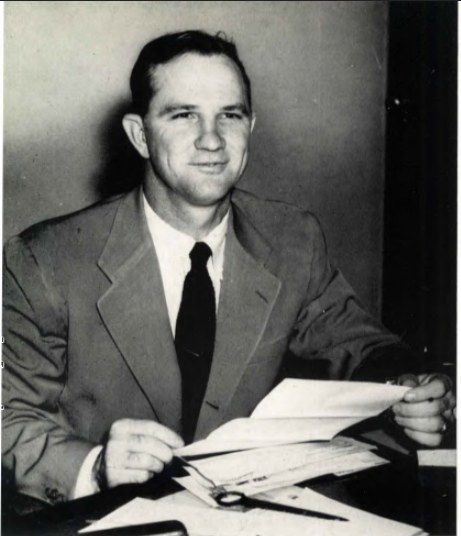
William Alexander retired as head coach on January 30, 1945, after 25 seasons. He remained athletic director until he died in 1950. His successor was Bobby Dodd, a Tennessee All-American who had been on Alexander’s staff since 1931 and had run the team several times when Alexander was ill.
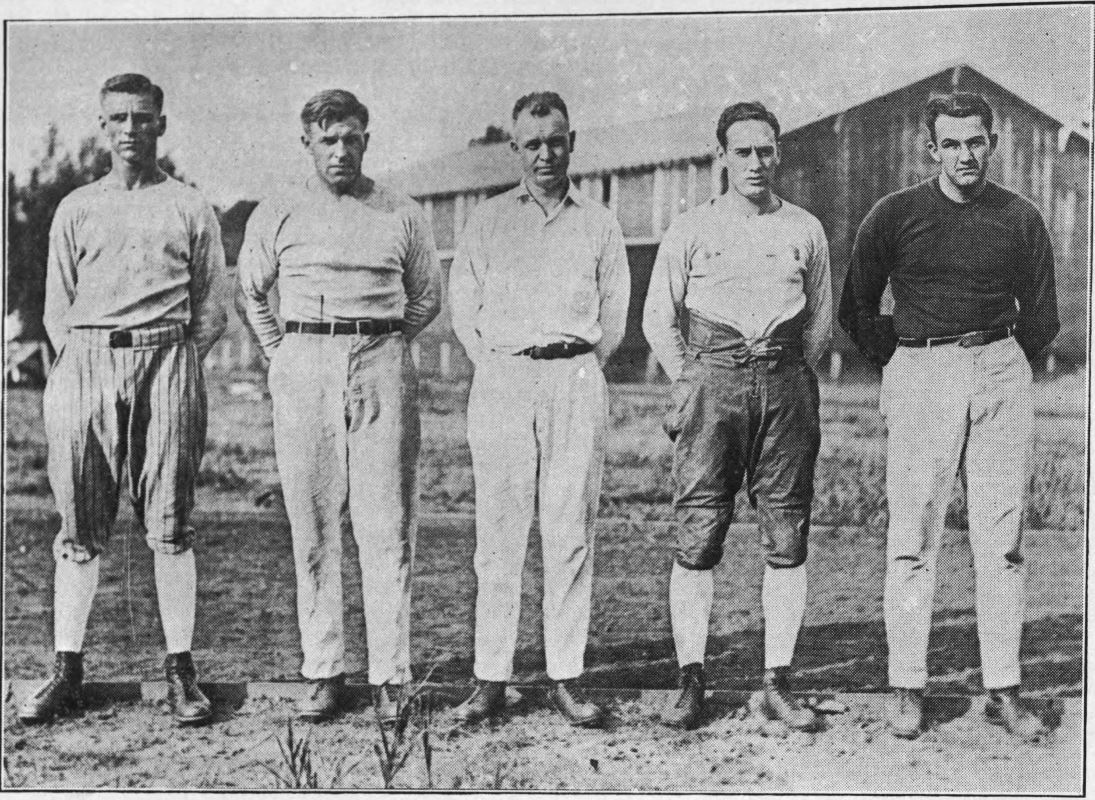
Dodd switched Tech to the T formation. He hired Ray Ellis, who had installed the T at Kentucky in 1944, as varsity line coach. Dwight Keith coached the backs and Norris Dean the ends.
The program was also mourning that year. Mack Tharpe was a former Tech tackle and Alexander’s longtime line coach, and he pushed Alexander to hire Dodd in 1930. Tharpe was killed in action near Iwo Jima on February 21, 1945. Tech’s athletic fund, the Alexander-Tharpe Fund, carries his name.
A wartime roster
The war was over by kickoff, but the campus still ran on Navy schedules. In November 1945, Tech had 724 Navy trainees: 223 V-12 seniors, 336 NROTC students and 165 in the V-5 program. That compared with 1,848 regular students.
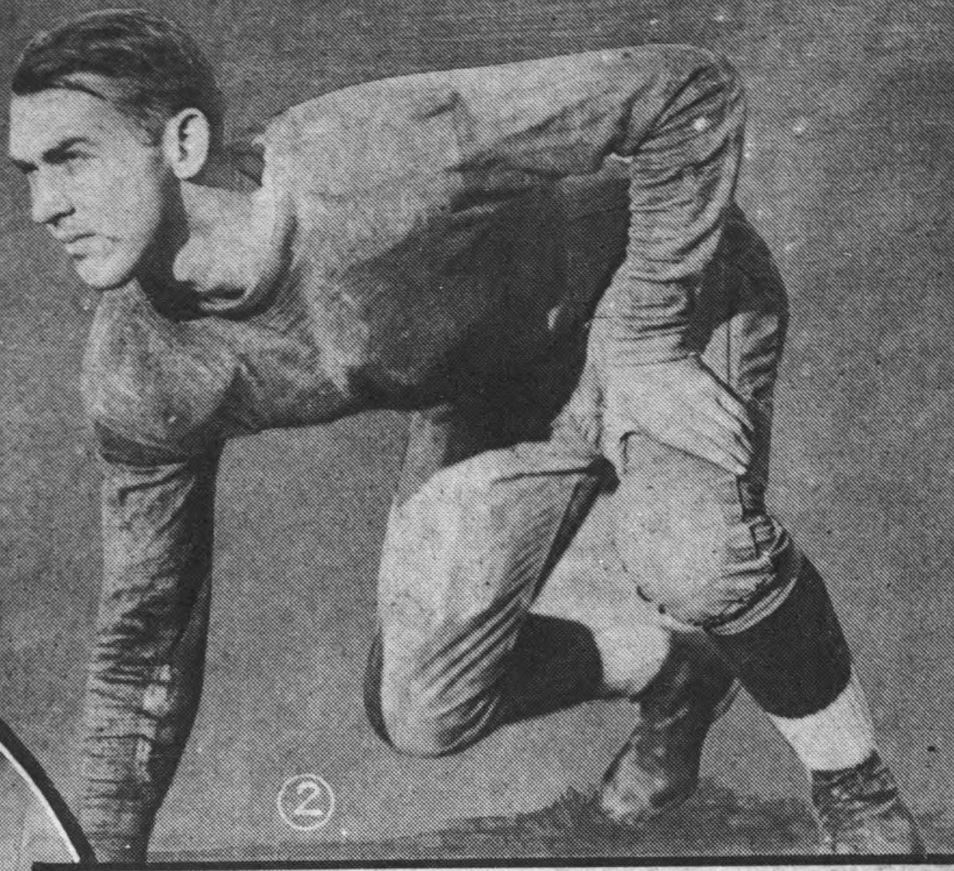
The squad reflected that mix. Alternate captain Johnny McIntosh, the starting fullback, was a Navy senior. The Technique announced his last game three weeks in a row, then explained that he was spending his leave playing football. He lasted through the LSU game. Tackle Deane Gaines, another Navy man, played his last game at Tulane before the Navy transferred him. Grey Cobb, a reserve quarterback, was a Navy senior. Bob Blake, a former Navy lieutenant from Savannah and the backup quarterback, attended Armstrong Junior College before the war but did not play football there. Under an SEC ruling adopted Sept. 28, the day before the opener, Tech assumed he would need a year of residence before he could play. About two weeks later, Commissioner Mike Conner ruled in a case involving Tulane’s Don Cash that students who had applied to an SEC school before May 9 did not need the year of residence. Blake had applied to Tech in April. Alexander notified Conner that Tech considered Blake eligible, and Dodd moved him up from the B team that week. End Jack Helms and halfback Jim Luck had played for Tech in 1942 and came back after their discharges.
The rest were mostly young civilians. Duke had first played football as a senior at Atlanta’s Boys’ High, and Jack Peek came from Atlanta’s Tech High. George Mathews and tackle Bobby Davis were expected to be drafted in December, until word came in late November that they could stay in school through March.
It was a thin group. The program roster for the Notre Dame game listed 37 names. The Blue Print said Dodd’s two big problems were a hard schedule and too few reserves, and several regulars played all 60 minutes against Auburn, Duke, LSU and Georgia. The same turnover hit opponents. Howard’s team was made up of V-12 trainees due to their November leave. Duke’s George Clark and Ernest “Bear” Knotts had just finished their Navy training, and the Tech contest was their last for Duke.
The season
The first half. Tech opened with a 20–14 win at North Carolina in heat the Technique put at 94 degrees. Peek threw a left-handed running pass to Bill Busbin for a touchdown, and Walter Kilzer fell on a fumble in the end zone for another. Then Notre Dame came to Grant Field. Tech scored first, on a naked reverse by quarterback Ed Holtsinger, but the Irish ran up 396 yards and won 40–7. Notre Dame’s student football review described the Engineers as young and badly outsized.
Tech routed Howard 43–0. The second-stringers started, and the regulars scored on their first play, a 50-yard run by Mathews. Tech scored 40 of its points in that quarter. The next two games fell during the break between terms. The first was against No. 2 Navy in Baltimore. Navy’s first two touchdowns came on a blocked punt and a 42-yard interception return, and Peek answered with a 70-yard touchdown run in the third quarter. Navy won 20–6, but Tech had more first downs, rushing yards and passing yards. The Blue Print called it the team’s best game.
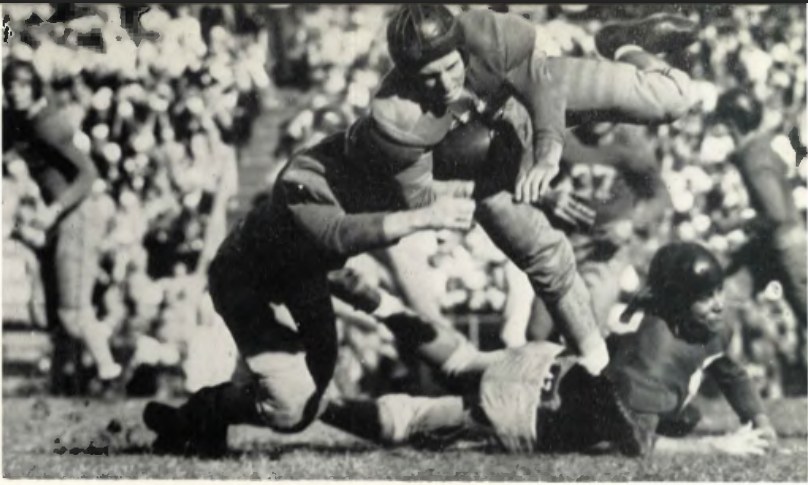
Auburn led 7–6 at halftime at Grant Field. Holtsinger then threw a 14-yard pass to Kilzer, who carried it the rest of the stretch for a 79-yard touchdown. Holtsinger also returned an interception 30 yards for a score, and Tech won 20–7.
The second half. No. 18 Duke won 14–6 in the rain. President Truman had planned to attend, and the Tech band had a Missouri Waltz arrangement ready for him, but he canceled. At Tulane, Dodd started his reserves to rest regulars averaging more than 55 minutes a game. The reserves scored on their first drive, and Tech won 41–7. The last two touchdowns came on interception returns by reserve linemen: 45 yards by tackle Bert Aton and 35 by center “Boots” O’Kelley. The Blue Print said Gaines played a great game at tackle. Tech also wore new uniforms that day: gold satin pants and white jerseys, replacing what the Blue Print called its usual drab canvas and mustard color.
That left Tech 2–0 in the SEC, and the Technique was talking about sharing the title with Alabama. LSU ended that with a 9–7 win, decided by a technicality. LSU led 6–0 at halftime after a 68-yard drive, but quarterback Y. A. Tittle’s extra-point kick was low. In the fourth quarter, Mathews intercepted Tittle at the Tech 10, and Tech drove 84 yards from there. Holtsinger’s passes to Mathews and Kilzer reached the LSU 16, and third-string back Al Lansing ran to the 8. Holtsinger faked a naked reverse and threw to Kilzer for the touchdown. Helms came off the bench to kick the extra point, and Tech led 7–6 with about six minutes left.
Tech stopped the kickoff return deep in LSU territory, but officials ruled that a Tech substitute had not reported in. Helms had to kick again, and Bill Montgomery returned that one to around the Tech 40. Gene Knight, held out with an injury from the week before, helped drive LSU to the Tech 15. A penalty pushed LSU back to the 20, and on fourth-and-12 Knight kicked a 27-yard field goal from a sharp angle and into the wind in the final two minutes. The AP said the ball barely cleared the crossbar. LSU ran for 307 yards to Tech’s 119, and Tech passed for 179 yards to LSU’s 1. Mathews led all rushers with 110 yards. The Blue Print called it the best game played at Grant Field all year. It was LSU’s first win over Tech in six meetings and Tech’s first SEC loss of the year, and the Atlanta Constitution said it about ended Tech’s bowl hopes. Afterward, Alexander said teams rarely cover a second kickoff as fast as the first, and that it had cost Tech heavily.
Clemson came to Grant Field the next week and won 21–7, an upset, before about 20,000. Dodd started his reserves again to rest the regulars for Georgia, and Clemson’s single wing drove 65 yards against them for a first-quarter touchdown. The regulars came in for the second quarter and gave up a 70-yard drive. The Blue Print said Tech’s line was badly outcharged for the first time all year. Tech’s only score finished a 78-yard drive on the first play of the fourth quarter. Holtsinger threw to George Brodnax, who made a running catch and got past Billy Poe for the touchdown. The AP’s story credited the touchdown to Mathews, but the Constitution, the Journal and the Blue Print all credit Brodnax. The Constitution had Peek leading all backs with 112 yards. Clemson answered with a 75-yard drive. Marvin Butler scored two of Clemson’s touchdowns, and his quick kicks kept pinning Tech deep. Tech led in first downs, 18–13, but Clemson outrushed Tech 222 yards to 196, and the AP had Tech completing only 10 of 32 passes. Danforth wrote that Clemson “manhandled two complete Georgia Tech football teams.” The Technique described a dispirited Tech team overwhelmed by an inspired Clemson squad. It was Clemson’s first win in the series since 1936, and Clemson would not win in Atlanta again until 1969.
That night Dodd announced that Tech’s practices would be closed, even to old grads and the press, for the first time that season. In the finale, Georgia held Tech scoreless 33–0 before 30,000 at Grant Field. Tech played without McIntosh, and Mathews and Davis had both been hospitalized with illness that week. Charley Trippi threw three touchdown passes, covering 69 yards to Charles “Rabbit” Smith, 67 to Reid Moseley and 41 to Johnny Rauch, and he ran for a fourth. Fullback Floyd Reid scored the fifth on a 43-yard return of a deflected Mathews pass, which put Georgia up 13–0 at halftime. Georgia outpassed Tech 323 yards to 50. Tech’s two best plays were both called back for offside: a 36-yard Holtsinger lateral to Peek and a 30-yard Holtsinger run on a fake reverse. The Blue Print named Davis the best lineman on the field. It was the only game all year in which Tech didn’t score, and the win sent Georgia to the Oil Bowl. Ed Danforth, the Atlanta Journal’s sports editor, wrote that Tech had already worn itself out against a schedule of top teams and was left with six losses and “a certain prospect of spending Christmas at home.”
The verdict. The Technique’s season-end column argued that three of the losses, to Navy, Duke and LSU, had nearly been wins. It said the team had a good, big line but a small backfield, with no natural passer and no big fullback. Once opponents took away the ends and tackles, as Clemson and Georgia did, Tech’s running game had nowhere to go.
The season was one of only two losing years in Dodd’s 22 seasons. The other was 5–6 in 1950. Sources disagree on the SEC finish: Wikipedia’s season page says sixth, and its list of seasons says tied for fifth. The Technique’s final standings explain why. Tech was listed sixth at 2–2, directly behind Ole Miss at 3–3, so both teams finished at .500.
Lineup
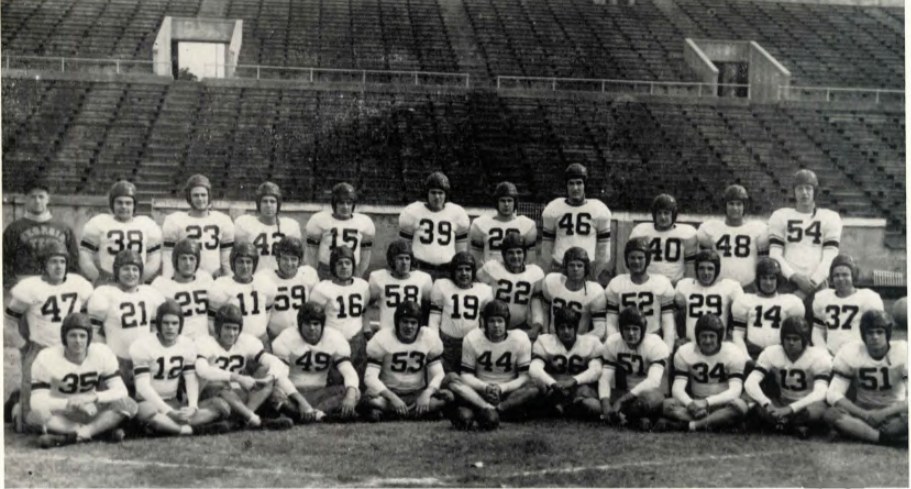
The AP box score from the LSU game and the Journal’s summary of the Georgia game list the same starting lineup except at fullback. The front row of the team photo is that lineup, with Basler at fullback:
| Pos. | Player |
|---|---|
| LE | Bill Busbin |
| LT | Bobby Davis |
| LG | Buck Doyal |
| C | Paul Duke (captain) |
| RG | George Hills |
| RT | Jack Glenn |
| RE | Walter Kilzer |
| QB | Ed Holtsinger |
| LH | George Mathews |
| RH | Jack Peek |
| FB | Johnny McIntosh (LSU); Joe Basler (Georgia) |
Holtsinger was from Jacksonville Beach, Fla. Earlier in the season, Luke Bowen started at left guard and Deane Gaines at right tackle. Reserves who played against Georgia were Brodnax, Kyker and Helms at end, Aton at tackle, McKinney at guard, Barron at center, and Lansing, Olson, Blake, Hatcher and Keller in the backfield. One more backfield name in the summary is illegible. Leslie Hatcher and guard Hal Brotherton were promoted from the B team for the Georgia game.
Against Clemson, Tech started an all-reserve lineup: Helms, Aton, McKinney, Barron, A. Thompson, Gossett and Clay on the line, with Blake, Williams, Lansing and Woodward in the backfield.
Schedule and results
| Date | Opponent | Site | Result | Att. |
|---|---|---|---|---|
| Sept. 29 | at North Carolina* | Kenan Stadium, Chapel Hill | W 20–14 | 25,000 |
| Oct. 6 | Notre Dame* | Grant Field | L 7–40 | 30,157 |
| Oct. 13 | Howard (AL)* | Grant Field | W 43–0 | 15,000 |
| Oct. 20 | at No. 2 Navy* | Municipal Stadium, Baltimore | L 6–20 | 54,875 |
| Oct. 27 | Auburn | Grant Field | W 20–7 | 30,000 |
| Nov. 3 | No. 18 Duke* | Grant Field | L 6–14 | 30,000 |
| Nov. 10 | at Tulane | Tulane Stadium, New Orleans | W 41–7 | 30,000 |
| Nov. 17 | LSU | Grant Field | L 7–9 | 28,000 |
| Nov. 24 | Clemson* | Grant Field | L 7–21 | 20,000 |
| Dec. 1 | Georgia | Grant Field | L 0–33 | 30,000 |
*Non-conference. Howard (AL) is today’s Samford.
Attendance figures are from Wikipedia, and contemporary counts often differ. The 1946 Blue Print gives 20,000 for North Carolina, 33,000 for Notre Dame, 12,000 for Howard, 47,000 for Navy, 27,000 for Auburn and 28,000 for Tulane. The Atlanta Constitution gives 25,000 for Tulane and 27,000 for LSU.
What came next
The slow start didn’t last. In 1946 Tech went 9–2 and beat Saint Mary’s 41–19 in the Oil Bowl. A year later it went 10–1 with an Orange Bowl win, and Dodd’s golden era was under way.
Sources
Contemporary
- The Technique, Sept. 29; Oct. 6, 13; Nov. 3, 10, 17, 24; Dec. 1, 8, 1945. Georgia Tech Digital Repository (Navy enrollment, roster and personnel notes, previews, the Truman cancellation, uniforms, final SEC standings, season-end column)
- The Blue Print, 1946, athletics and military sections, plus p. 288. Georgia Tech Digital Repository (coaching staff, captains, write-ups of all 10 games)
- Chick Hosch (AP), “Fast Start Gives Bengals Triumph,” News and Observer (Raleigh), Nov. 25, 1945, and Ed Danforth, Atlanta Journal, Nov. 25, 1945 (Clemson game; the Journal clip cuts off the headline)
- F. M. Williams, “Tech’s Bobby Blake Likely To Be Eligible,” Atlanta Constitution, Oct. 11, 1945
- F. M. Williams, “Yellow Jackets Lose Thriller in Last Two Minutes to LSU,” and Charlie Roberts, “Knight’s Winning Boot Haunts Tech Coaches,” Atlanta Constitution, Nov. 18, 1945
- Jack Troy, “Jacket Line Shines in Easy Win,” Atlanta Constitution, Nov. 11, 1945, and “Tigers Score 2 Times Against Jacket Varsity,” Atlanta Constitution, Nov. 25, 1945
- Chick Hosch (AP), “Tiger field goal is factor in LSU victory,” Pensacola News Journal, Nov. 18, 1945
- Ed Danforth, “Trippi paces 33–0 victory,” Atlanta Journal, Dec. 2, 1945
- “Georgia Tech rally defeats Auburn, 20–7”, Pittsburgh Press, Oct. 28, 1945
- Notre Dame Scholastic Football Review, 1945, Notre Dame Archives
Photos
- The Blue Print, 1946, Georgia Tech Digital Repository (Dodd portrait, team photo, game action). Not registered or renewed for copyright, per the Catalog of Copyright Entries.
- Wikimedia Commons, public domain (Alexander and staff, 1925; Mack Tharpe, 1925)
Secondary
- 1945 Georgia Tech Yellow Jackets football team, Wikipedia (schedule, attendance)
- List of Georgia Tech Yellow Jackets football seasons, Wikipedia
- William Alexander, Wikipedia (retirement date)
- Mack Tharpe, Wikipedia; Ken Sugiura, “Remembering Mack Tharpe, a fallen Tech war hero”, AJC, 2015
- Inventory of the Ray F. Ellis Papers, Georgia Tech Archives
- Clemson vs. Georgia Tech Game Notes, Clemson Athletics (Clemson’s wins in Atlanta)
- Rearview Mirror: Bobby Dodd and the Raiders of the Lost Orange Bowl, From the Rumble Seat

Comments
Loading comments…